By Jason Klein
As Seen in Guestbook NY – 2013
Click each individual thumbnail below to read the feature story, exactly as it appeared in the 2013 issue of Guestbook NY.




By Jason Klein
As Seen in Guestbook NY – 2013
Click each individual thumbnail below to read the feature story, exactly as it appeared in the 2013 issue of Guestbook NY.
By Jason Klein
As Seen in In New York Magazine – 8/16/12
Commissioner Bud Selig once said he couldn’t think of anyone better to represent the game of baseball than Curtis Granderson.
After meeting with the Yankees Centerfielder, I can see why.
Granderson lived up to the high praise when I spoke with him on Monday afternoon at Yankee Stadium. We chatted in front of a group of fifty children, and their parents, during a meet & greet event coordinated by Steiner Sports Marketing.

Speaking with Curtis Granderson
The Yankees center fielder was all smiles as he addressed the kids on a wide variety of topics, many of which emphasized his solid upbringing and strong moral background. Dressed in full Yankees attire, Granderson stressed the importance of “always doing the right thing,” “working hard,” and “having fun.”
Though he happily discussed his accomplishments on the field – including 3 All-Star selections and a 2011 Silver Slugger Award – Granderson was most proud of what he’s been able to accomplish off it.
“There are 750 Major League Baseball players. Out of those 750 players there are 38 of them with a college degree. I’m one of them,” he said. “So that’s one of the big things I brag about. I don’t brag about too much else, except for that.”
And rightfully so.
Granderson earned a degree in business from the University of Illinois-Chicago after being drafted by the Detroit Tigers in 2002 as a junior. He easily could have given up on school after securing a professional baseball contract. However, as the son of two teachers, Granderson grew up understanding the importance of a solid education and the opportunities it can create.
“The great thing about getting your college degree is, after you’ve done that, you can do a million other things in life,” he said. “All the doors and opportunities are available for you. I do have an opportunity to play this great game of baseball, but that’s not going to happen forever. I have to start thinking about other things I want to do with my life afterwards.”
The possibilities will be endless for the articulate and animated Granderson. He didn’t dismiss the idea of going into teaching like his parents did, but upon his retirement, there will be no shortage of television and radio opportunities available for him. An energetic and well-spoken former player is a hot commodity in the sports media industry. Granderson’s bubbly disposition certainly fits the part.
He let his personality shine during our interview, joking with the kids about his obsession with social media and texting. He admitted: “you can’t keep the phone out of my hand.” He acknowledged an addiction to Facebook & Twitter – confirming he does all of his own posting and tweeting – and laughed while admitting that eating, sleeping, and putting on a clean pair of socks are among his favorite activities.
Regular stuff for a regular guy.
“We just go around and do our thing,” he said. Everyone is surprised to see us in basic places like Walmart, Target, and Bed Bath & Beyond. We need groceries, and toothpaste. We need to go get that stuff too! We’re normal people!”
In Selig’s eyes, Granderson is anything but normal. He is a special player and an extraordinary ambassador for baseball. For this reason, he’s shown no hesitation in sending him out to spread the game to other cultures.
“This game of baseball has allowed me the opportunities to do amazing things,” he said. “I get a chance to be here at Yankee Stadium, travel all over the world to places like South Africa, New Zealand, China, Europe and Panama. I’ve been to a bunch of different places to help promote baseball. I get to meet with a lot of kids from all over the world and show them how cool this game is.”
They also get to see just how cool Granderson is.
Selig already knew.
Now I do too.
Watch My Interview With Granderson!
Connect With Jason:


By Jason Klein
As Seen in In New York Magazine – 6/25/12
Derek Jeter doesn’t want to talk about himself. Heck, he doesn’t even want to hear someone else talk about him.
Believe me. I tried.
I met with Jeter on Tuesday afternoon, at his place of business, Yankee Stadium. A group of fifty children had just finished up an on-field clinic, coordinated by Steiner Sports Marketing, and had since gathered out in the centerfield bleachers. Sitting along with their parents, they anxiously awaited their chance to chat with the Captain of the Yankees.

Jeter Was Humble During Our Talk.
I was there to emcee the question and answer session – a staple of most Steiner Sports events – and decided to give Jeter the type of introduction an athlete of his stature rightfully deserves. I was prepared to mention his Rookie of the Year Award, all of the Gold Gloves, the All-Star appearances, “The Flip,” “The Dive,” the fist pumps, his 3,000 hits, and of course, his 5 World Series Rings. It was the proper thing to do, no question.
Jeter arrived on time sporting his familiar game day attire, personalized Brand Jordan cleats, and Yankees cap pulled down low – like his reputation, the curve on his brim was flawless. Everyone stopped to stare at him upon his arrival, as if Superman had entered the building. A hero to Yankees fans, the shortstop was wearing his signature “Jeter Shield” logo across his chest, instead of a Super “S.”
I sat down next to Jeter – we shared a bleacher seat – took a deep breath, briefly introduced myself to the audience, and then began my pinstriped soliloquy:
“I have the pleasure of introducing someone who really doesn’t need an introduction…” I started.
Then, it happened.
“So don’t introduce me…hi everyone!” interrupted Jeter.
Derek Jeter cut me off like an errant throw from the outfield. I quickly recovered.
“I’ll do it anyway,” I said.
I was determined to deliver my premeditated homage to the star player. I continued:
“The guy right here to my right, drafted by the Yankees…”
It happened again.
“No, no, no, you don’t have to do all that,” Jeter interjected again. This time, defiantly waiving his arms above his head. “Hi, I’m Derek.” He said.
He’s just Derek. Simple as that.
The Kalamazoo Kid has never been one to hog the spotlight, or discuss his personal achievements. It’s just not his style. Throughout his legendary career, Derek Jeter has maintained a very consistent message. His priorities are his teammates, and his mission statement is to win championships. Period.
It’s a theme that permeated our chat.
Jeter was asked to decipher which of his seventeen seasons he cherished most. His answer was confident, and decisive, like his swing.
“‘96, ‘98, ‘99, 2000, and 2009. All five of them,” Jeter said. “We won all of those years.”
Many of the little sluggers listening in weren’t born when confetti rained down on those teams from the late nineties. I asked Jeter to explain to them what made those World Series teams so special. His response reinforced his selfless stance.

Jeter Larger Than Life With Fans.
“The only thing we cared about was winning. That was it. We didn’t care about statistics. I can’t tell you what anyone hit on those particular teams, but I can tell you we won a lot of games. The only thing that mattered to us was winning.”
When asked for his thoughts on potentially catching Pete Rose and his record 4,256 career hits, Jeter dodged the question admitting, “I’m just trying to make it to 7:00 tonight. Rose is a long way away.”
I couldn’t break him. His team-oriented responses are polished, professional, and genuine. He consistently looks you in the eye with every noble word he speaks.
He’s just as dependable on the field. He shot down any notion he plays differently in big games against the rival Red Sox, stating: “There are more fans, but I try to play the same all the time.”
Jeter was unflappable throughout the session, hitting all of his points with the same consistency he does a baseball.
One audience member wondered how Jeter was able to get over the 2004 ALCS collapse to the Red Sox, admitting he had not yet recovered. Jeter responded with: “Time to let it go buddy.” Then adding, “When you lose it’s tough, but you have to be able to turn the page.”
The reply gave insight into his tremendous composure and focus on the field.
Rather than boast about his triumphs, Jeter chose to use the open forum to communicate uplifting messages to the throng of adoring kids. He urged them to “get good grades,” and “be willing to work harder than everyone else.” He also told them to “try and have fun and stay as positive as possible.”
There is no one in the game more positive than Jeter. Always confident and smiling, Jeter tries to avoid all negativity, a trait that will ultimately keep him out of the broadcast booth once his Hall of Fame career comes to an end.
“I have a hard time criticizing people,” he said. “There’s no chance I’ll ever be in the broadcast booth. I know what it’s like to fail. I know what it’s like to be out there and struggle.”
He also knows a lot about success. He’s had a ton of it over the course of his seventeen seasons with the Yankees.
You could ask him about all of his triumphs. Chances are, he won’t elaborate too much. You see, Derek Jeter doesn’t want to talk about himself. In his eyes, he’s no bigger than anyone else on the team.
He’s just Derek. Simple as that.
Watch My Interview With Jeter (e-mail for password)
Connect With Jason:
By Jason Klein
As Seen in In New York Magazine – 4/5/12
If tomorrow’s Opening Day is the beginning of the end for Mariano Rivera, I’m proud to say I faced him at least once during his remarkable career.
The first time I saw Rivera throw a baseball, I was fifteen years-old. It was 1995, and I couldn’t drive a car yet. Luckily, to tag along on his impending ride into baseball immortality, I didn’t have to.

With Mariano Rivera, in 2007, After Our Face Off.
For half of my life, I’ve watched the Yankee closer dominate a sport like no other athlete ever has. His tranquil disposition and devastating cutter are both legendary. His career regular season numbers are staggering and his postseason stats are incomprehensible.
His competitive spirit and propensity to always do the right thing help make him the most revered player in baseball. In May of 2007, I got a first-hand glimpse of both these remarkable traits when I personally stepped up to the plate against The Great Rivera.
While working at Steiner Sports Marketing, I would periodically unite passionate clients with their sports heroes during a public question and answer session or a private meet and greet event. I had arranged to meet Rivera prior to an afternoon game in the Bronx, and introduce him to a client’s child. The brave youngster was battling illness and desperately wanted to meet his favorite player, Mariano.
The meeting was scheduled for 10:45 AM behind the Yankees Dugout, just before the gates were scheduled to open to the general public. Rivera was to huddle up with us for about 5-10 minutes, take some pictures, and sign some baseballs. There were very few people in the Stadium at that point so connecting wouldn’t be an issue if things went according to schedule. They didn’t.
By 11:00 AM, Rivera had yet to emerge from the clubhouse and other fans were starting to make their way into the building. I reassured the child that everything would work out as planned, but the beads of sweat on my neck told a different story. I was panicking.
Was I being stood up by Mariano Rivera? How could this be reconciled? What would I tell the child? How could I explain to my boss, Steiner Sports CEO, Brandon Steiner? It was embarrassing, like a hitter’s feeble attempt to connect with one of Rivera’s cutters.
Then, “The Sandman” entered. The greatest closer in the history of baseball popped his head over the top of the dugout looking for me. It was 11:10 AM, the gates were open, and I was now surrounded by autograph-seeking fanatics. I yelled for Rivera. So did the three hundred other people now standing with me. He couldn’t find me in the crowd and disappeared back into the dugout. The meeting never occurred.
Despite their distinct disappointment, the child and his family were very appreciative of my efforts. I profusely apologized and left them to enjoy the afternoon from their seats, just behind the dugout.
Two days passed and I received a call from Brandon. He summoned me to his office to discuss my botch in the Bronx. When I entered, there was already someone sitting with him – a balding, lanky-looking guy in a brown polo and black jacket.
“Come on in, Jason,” Brandon bellowed with a smile from ear to ear. “Time to defend yourself against Mo! It’s Klein v. Rivera today.”
The skinny fellow sitting in the office calmly uncrossed his legs, spun himself around, and flashed a bright toothy smile in my direction. It was Mariano Rivera.
I dug in against the legendary pitcher, blaming his tardiness for the plan’s failure. Rivera stared me down and unloaded some high heat in my direction. He contended that he was exactly where he was supposed to be and that I was the one who dropped the ball.
Take that!
Mo shot me a look, and then grinned. He was toying with me, trying to break me like an opponent’s bat. I didn’t stand a chance, did I? He was Mariano Rivera, after all.
I knocked the dirt out of my cleats and stepped back in the box.
Again, I detailed exactly what went down, condemning Rivera’s poor punctuality and questioning his recollection of the day’s events. The competitive Rivera calmly and quietly shook his head in disagreement. Brandon, still smiling as he presided over the dispute, seemed to enjoy watching me try to take down the celebrated closer.
It was clear, this was going nowhere. Like on the mound, Rivera, the ultimate competitor, could do no wrong.
Our showdown yielded a benign base on balls as I walked out of Brandon’s office without resolution. Baffled by Rivera’s stubbornness, I slumped back down at my desk and got back to work. I remember thinking, this must be what it’s like to hit against the tenacious pitcher.
Then, like he seemingly always does, Rivera did the right thing. He stopped by my desk on his way out and assured me he would connect with the boy and his family at an upcoming game. He confidently nodded his head at me as if to say, “I got this, don’t worry.”
He never admitted he was late the first time – he didn’t have to. After all, a good closer is always last to enter a game, but ultimately, seals the deal when the pressure is on. Mo did just that.
He met the boy during the next home stand. The get-together was just a brief stop on baseball’s freeway for Rivera, but it was a prime example of how the closer always gets the job done. He’s hinted that 2012 will be his final stop. If he decides to take the exit ramp at season’s end, it will take him directly to Cooperstown.
He’s a Hall of Famer both on, and off the field.
It’s been a heck of a ride for Mo.
I’m glad I got to face him at least once along the way.
Connect With Jason
By Jason Klein
Originally Written For Guestbook NY – 2012
Click each individual thumbnail below to read the feature story, exactly as it appeared in Guestbook NY 2012:



By Jason Klein
Originally Written For Ed Randall’s Talking Baseball – 11/22/11
It can be argued that Justin Verlander deserved to win the 2011 American League MVP Award. Technically, that argument begins – and ends – with the fact that he did, indeed win the award. He’s the first starting pitcher to do so since Roger Clemens in 1986.
Verlander was sensational this past season. His historic campaign included a 24-5 record, a 2.40 ERA, a 0.920 WHIP, a no-hitter, and a Cy Young Award. Without Verlander, the Detroit Tigers don’t win the Central Division and are not a playoff contender. He was an invaluable cog in the 2011 Tigers wheel.
No debate.
Did Verlander deserve to win the MVP Award? Yes.
Should he have actually won the MVP Award? Disputable.
Many will contend that a pitcher shouldn’t qualify for the award. Position players can’t win a Cy Young Award, why should a pitcher be allowed to win an MVP? After all, starting pitchers directly impact only about 35 games a season. This discussion has some validity to it, but one might also reason that a pitcher responsible for a quarter of their team’s entire win total is more valuable than an everyday position player who steps to the plate 600 times.
Historically, the word “valuable” can be difficult to define – especially by MVP voters.
Once upon a time, Yankees pitcher Ron Guidry and Red Sox starter Pedro Martinez put together two of the most dominant pitching seasons of all-time. Their efforts were comparable, if not better, than what Verlander accomplished this past year. While both won the American League Cy Young Awards in their respective seasons, neither one walked away with the MVP award – both finished second in the voting.
Check this out: in 1978, Guidry went 25-3 with a 1.74 ERA and a 0.946 WHIP. He struck out 18 Angels on June 17, and was the winning pitcher during the famous one-game playoff at Fenway Park, propelling the Yankees towards an American League Pennant and an eventual World Series Title. Guidry lost the MVP race to Red Sox Outfielder, Jim Rice.
Equally as dominant, Pedro Martinez manhandled the American League in 1999, going 23-4 with a 2.07 ERA and a 0.923 WHIP. Martinez started that season’s All-Star Game, struck out 5 of the 6 batters he faced, and won game MVP honors. Martinez lost to Rangers Catcher, Ivan Rodriguez in the league MVP voting that season.
Verlander was no more valuable to his Tigers in 2011 than Guidry was to the Yankees in 1978 or Martinez to the Red Sox in 1999. But, perhaps in 2011, voters have a better grasp on the meaning of the word “valuable.”
It might also have been circumstantial.
Verlander benefitted from a flawed group of position player candidates, including Jacoby Ellsbury (Red Sox), Curtis Granderson (Yankees), Jose Batista (Blue Jays) and Tigers teammate Miguel Cabrera. None were clear-cut winners, and each received first place votes, potentially paving the way for Verlander to sneak out on top.
Pitchers have been snubbed by MVP voters for years, yet Verlander shouldn’t have to pay the price for past mistakes. Perhaps this year’s voting is a sign of progress or forward thinking. Maybe it was just circumstantial.
Regardless, voters finally got it right in 2011, despite getting it wrong with guys like Guidry and Martinez in the past.
No debate.
Connect With Jason
By Jason Klein
Originally Written For Ed Randall’s Talking Baseball – 9/13/11
Mariano Rivera is about to catch Trevor Hoffman. When he does, Jorge Posada is the right man to catch Rivera.
The immortal Rivera is just one save shy of 600, two away from joining Hoffman atop the all-time career saves list with 601, and three away from passing him with 602. After that, there will no doubt be more saves added to Rivera’s first-ballot Hall of Fame resume – the ageless closer currently has a 2.09 ERA, and at age 41, looks as good as he ever has.
Perhaps prospects like Jesus Montero or Austin Romine will backstop Rivera’s final career save, sometime in 2012 or beyond. That’s for another day. When Rivera collects his 602nd career save, probably sometime in the next week or so, it should be Posada receiving the record-breaking, and no doubt devastating, cutter.
There is no one more fitting to do the honors.
For 13 seasons, from 1998-2010, Posada was a mainstay behind the plate for the Yankees. Although the switch-hitting catcher was always revered more for his abilities at the plate, rather than behind it, he certainly held his own defensively over the years. With the acquisition of Russell Martin, and up-and-comers Montero and Romine on the way, Posada was relegated to DH in 2011, getting the occasional start at first base.
He was also embarrassed twice, on national TV. First he was dropped to 9th in the line up on May 14th, and then he lost his DH job on August 7th – both prior to games with the Red Sox.
Iroinically, when injuries claimed Martin and back up Francisco Cervelli, Posada was thrown behind the plate for the first time all season on September 10th. However, the Yankees were so disenchanted with the 40-year-old catching, they called up the 22-year-old Romine the next day to take over.
Posada has lost a step, and this will most likely be his final season in pinstripes, but he deserves the opportunity to be a part of history with his battery mate, Rivera.
On July 9th, Posada was the first one to congratulate his long-time teammate Derek Jeter at home plate following his 3,000th career hit. For 13 seasons, Posada was the first to toast his closer, dropping the ball in his mitt, save after legendary save. He’s certainly capable of catching one more inning – the ninth of course – during the record-breaking affair.
It’s the right thing to do for a franchise obsessed with history and magical storylines. There’s no question, the moment will belong to Rivera, but Posada should get to play a small part in the festivities.
“Enter Sandman” will fill the air as Rivera makes his iconic trot to the hill, in hot pursuit of history. The flashbulbs will be popping that night. It’s only fair that Posada’s glove is popping too.
Connect With Jason
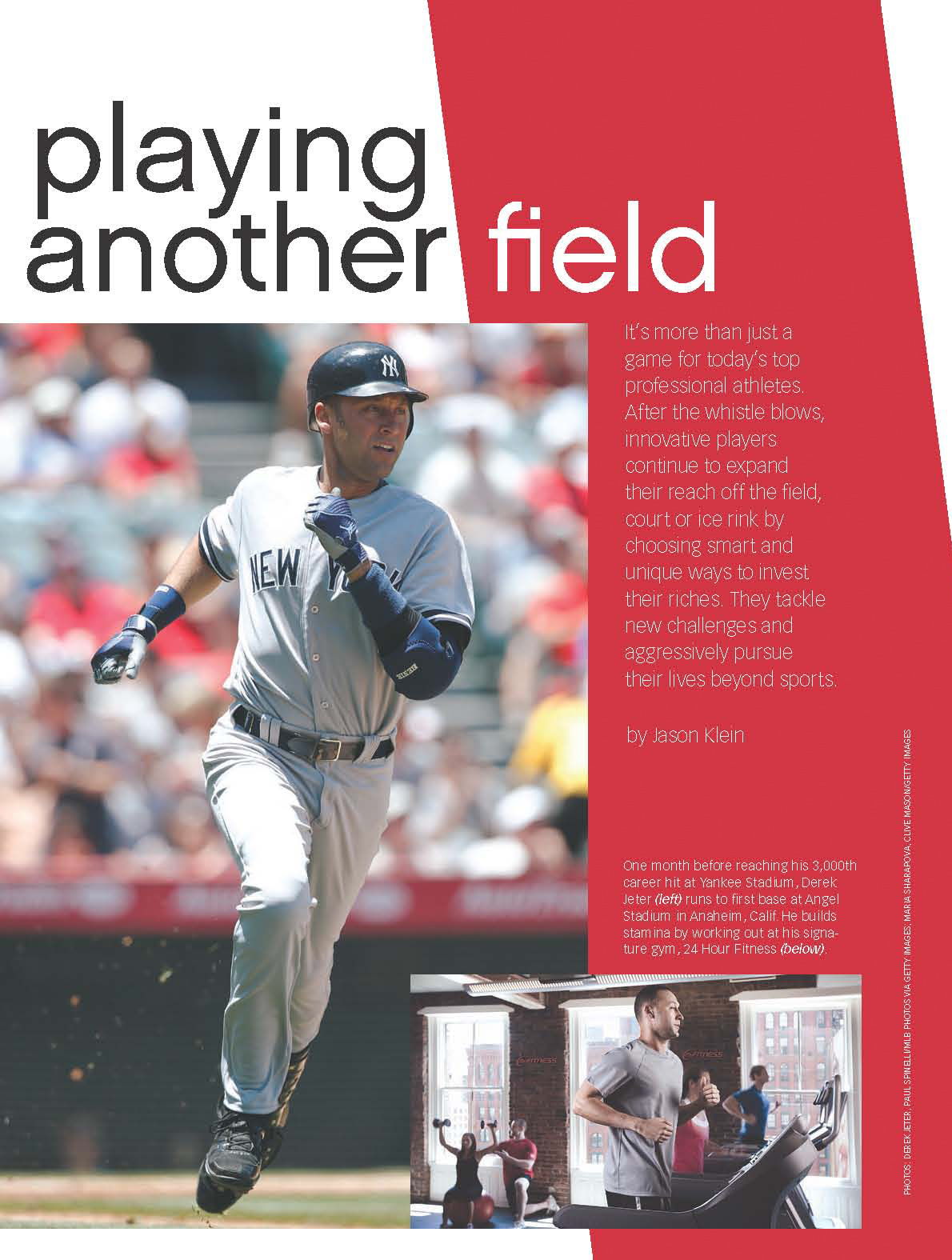
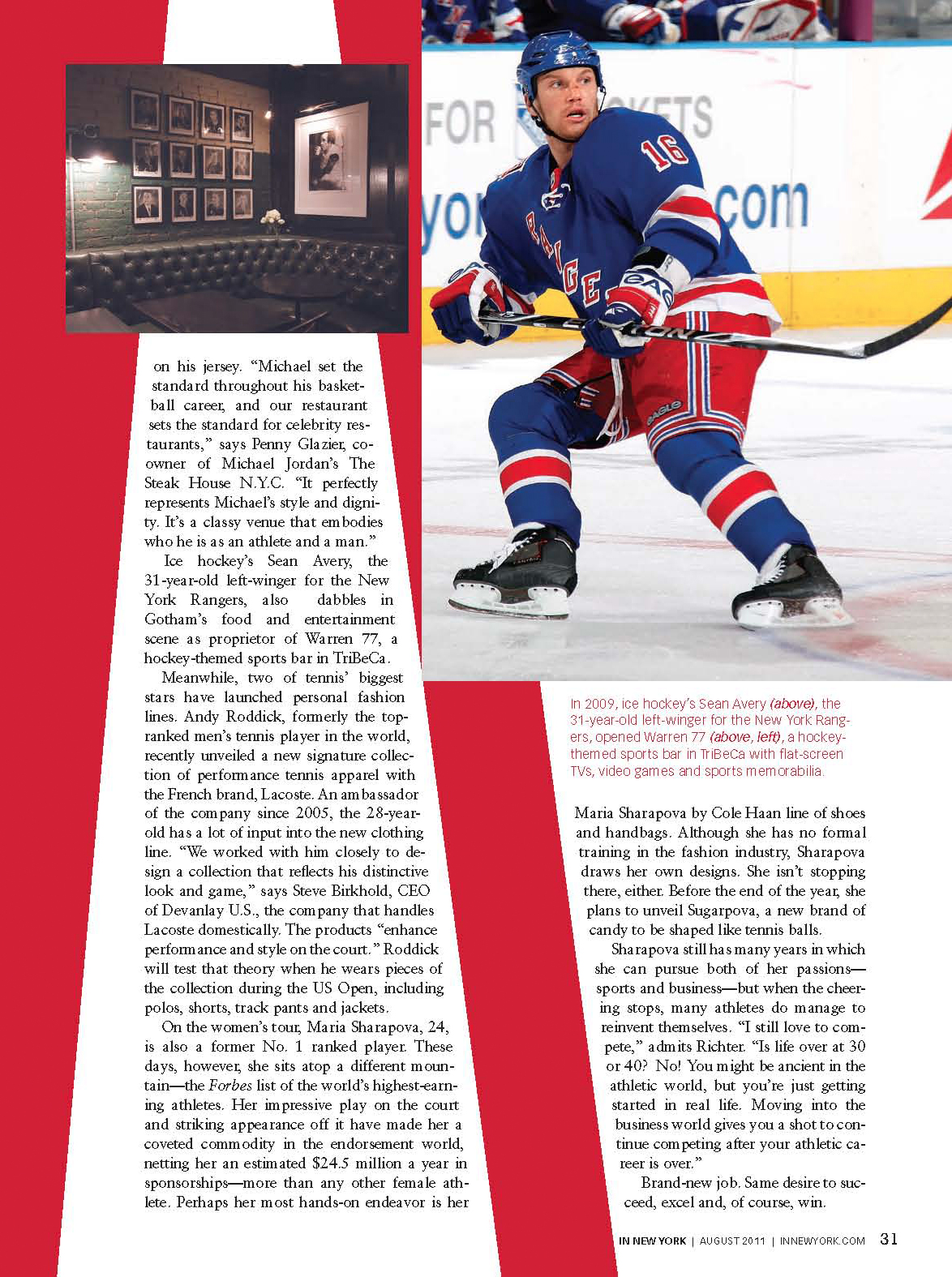
By Jason Klein
Originally Written For IN New York Magazine – August 2011 Issue
Click each individual thumbnail below to read the feature story, exactly as it appeared in the August 2011 Issue of IN New York Magazine:
By Jason Klein
Originally Written For Ed Randall’s Talking Baseball – 7/9/11
One thousand hits to go.
Derek Jeter will get to 4,000 hits. Guaranteed. No joke.
Sure, his much celebrated 3,000thhit, a home run off David Price of the Tampa Rays, was only written into the record books earlier today, but there’s no need to let the ink dry before looking ahead. There are still plenty of base-knocks left in his clutch bat – at least one thousand more to be exact.
That’s how the Captain of the New York Yankees has always operated – good or bad, the past is the past and he will reflect back when his career is over.
Mr. 3,000 now. DJ4K then.
There will be skeptics. Many will claim he is slowing down, his skills are diminishing, and that the end is near. Go ask Yogi, he’ll tell you when it’s over. Despite what critics say, Jeter will continue to push forward. That’s all he knows how to do.
He’ll celebrate number 3,000, as he should. It’s a remarkable achievement – one that only 27 other men in the history of the game can share with him. He is also the first Yankee to ever reach the milestone. But Derek Jeter has made a career out of achieving greatness without losing focus. This will be no different.
When it happens, Jeter will join the only other two players in baseball history to reach the 4,000 hit mark: Pete Rose (4,256) and Ty Cobb (4,189). It’s easier to compare Jeter with Rose than it is with Cobb. Widely regarded as one of the greatest players of all-time, Cobb had a 3-year head start on both Jeter and Rose, breaking into the big leagues at age 18. As a result, he collected his 3,000th hit as a youthful 34 year-old in 1921.
By contrast, both Jeter and Rose broke in as 22 year-old rookies (at age 21, Jeter did play 15 games in 1995, but didn’t qualify as a rookie until 1996). Also, both players reached career hit number 3,000 at age 37 – Rose got his on May 5, 1978. Rose went on to play another 8 years, but it only took him 6 more seasons to eclipse 4,000, turning the trick on April 13, 1984 – one day before his 43rd birthday.
Currently, Jeter has 74 hits in 2011, giving him an even 3,000 for his career. If he collects another 100 hits over the next few months, he will finish the season at 174, and 3,100 for his career – very doable for a player who has averaged 194 hits per year over the last 15 seasons. Under those very realistic pretenses, Jeter would only have to average 150 hits per year, over the next 6 years, to reach 4,000 by the age of 43 – just like Rose did.
Still don’t think Jeter can do it? Consider this: he has never failed to reach 150 hits in a single season. The closest he came was in 2003, a year he lost significant time to a shoulder injury. He only played 119 games that season, and still had 156 hits. True, those productive campaigns all came from a much younger Jeter, and he is bound to take a step back as he continues to age, but it won’t be significant enough to prevent one of the most consistent players of all-time from reaching Club 4K.
As Jeter battles both opposing pitchers, and Father Time, en route to 4,000 hits, there are four concessions he must make:
He has to change positions. Making the move to the outfield, and spending more time as the designated hitter, will make Jeter a more flexible piece within the Yankees plans. He could even see time in a third base/DH platoon with Alex Rodriguez. Sure, as a shortstop, he won his fifth Gold Glove Award in 2010 at the age of 36, and continues to prove doubters and statistical analysis wrong, but he won’t be able to keep that up as he gets into his forties.
He must take a pay cut. Prior to the 2011 season, the Yankees gave Jeter a new contract that takes him through his 40th birthday – the final year is an option year. The financial terms of the deal were very aggressive for a player of his skill level and age. However, he got paid, in large part, for his intangibles and his legacy with the franchise. When this current deal expires, he will need a new three-year deal to reach 4,000 hits. Jeter will not be able to command the same dollars then. While money is never an issue for the Yankees, they will have little interest in giving a 40-43 year-old Jeter the same $15-$17M annually that they gave him at age 37. If Jeter wants to preserve his legacy and collect his monumental 4,000th hit in pinstripes, he has to take less money.
He has to stay healthy and smart. Jeter, the definition of consistency, has only missed significant time twice in his career – the aforementioned shoulder injury in 2003, and this latest DL stint for a bum calf. Throughout his career, he has made a habit of playing through injury and shrugging off any suggestion that he might need to take a rest. For him to successfully make it through the next six seasons, he will need to avoid any major injuries and be smart about which minor ones he decides to play through. His body will heal slower as a forty-year-old. He must understand this and not push the envelope and risk further damage and missed time.
He needs to chase a personal goal for once. Forget Charlie Sheen, Derek Jeter is all about #winning. The unselfish Jeter has never been about personal statistics. Instead, he focuses all of his efforts towards the team’s mission statement: World Series championships. That has to change, slightly, during his quest for 4,000 hits. No doubt, the opportunity to add additional rings to his collection will motivate Jeter to continue playing, but his statistical contribution to the common cause will start to diminish. He must accept this, check his pride at the door, and be willing to play a few seasons below the “Jeter standard of excellence” in order to compile the necessary hits he needs.
If he can do the four things mentioned, and make 4,000 hits a priority, there is no doubt he will achieve it. After all, when has Derek Jeter not succeeded at something he set his mind to?
One thousand hits to go. No joke.
Mr. 3,000 now. DJ4K then.
Connect With Jason
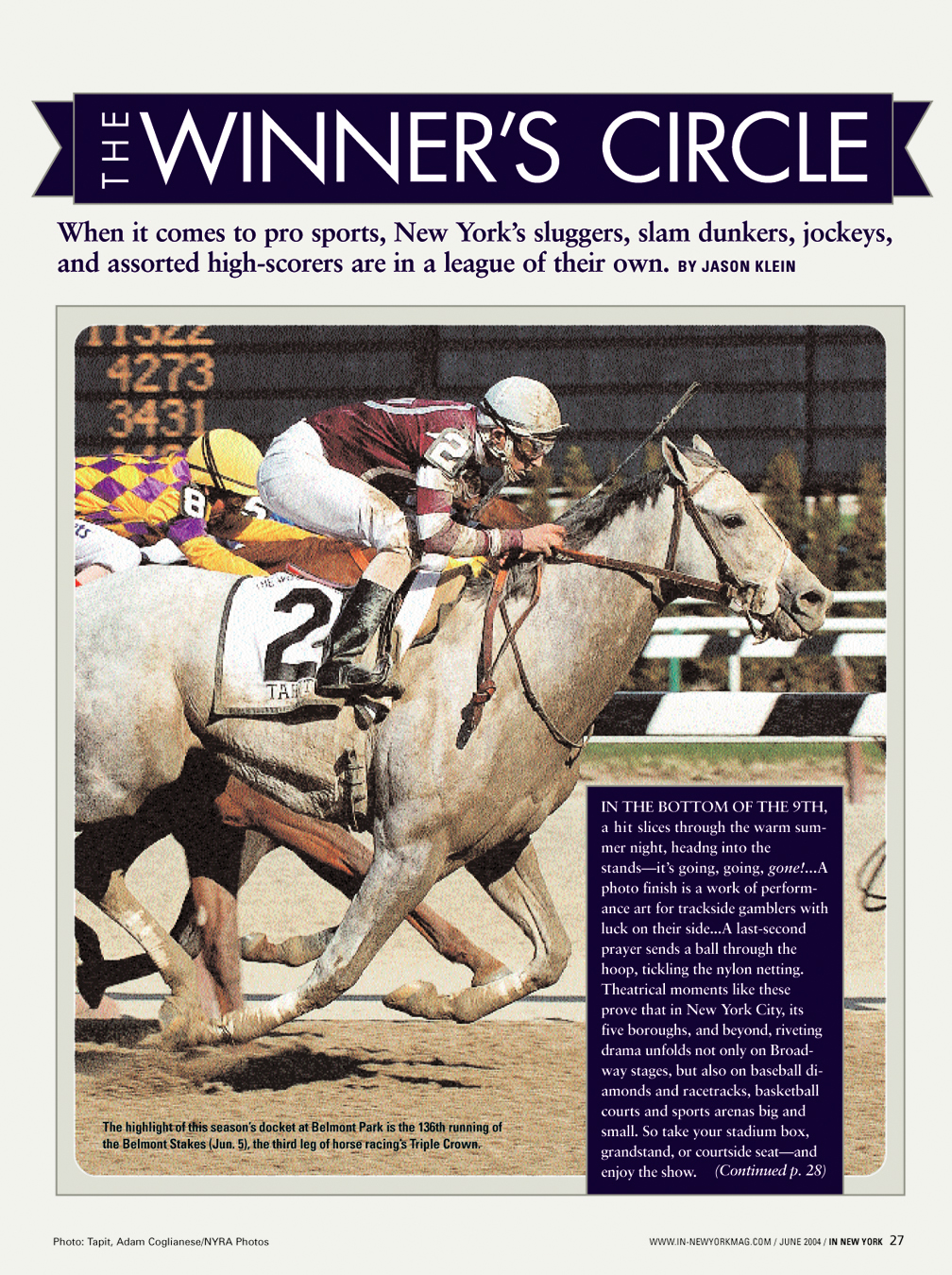
By Jason Klein
Originally Written For IN New York Magazine – June 2004 Issue
Click each individual thumbnail below to read the feature story, exactly as it appeared in the August 2011 Issue of IN New York Magazine:




 Jason Klein

